Fire stopping after a fit-out
A new tenant brings new cables, new ducts and new holes. The fire walls need putting back.
- Every seal labelled and photographed
- BM TRADA / FIRAS-certificated contractors
- Written price before any work
Offices round London Bridge, Bankside and Southwark Street change hands often. Each new tenant strips out the last one's partitions and brings in their own data, power and cooling. Most of the services run above the ceiling, and most of them cross a fire wall somewhere: round a stair, a lift, a riser, or the wall between two tenants.
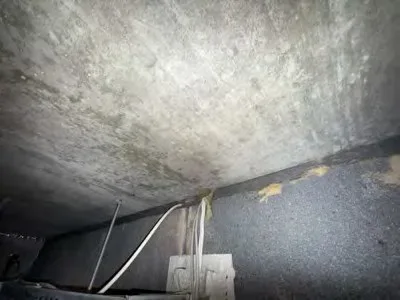
Before the ceiling goes back
The best time to fire stop a fit-out is after the services are in and before the ceiling grid is filled. Every hole is visible and every trade has finished drilling. That window is short, so we want to know the programme early.
What usually needs doing
New data cables bundled through the head of a stair wall. Air conditioning pipework in lagging through a riser wall, which needs a product tested for lagged copper. A kitchen extract duct crossing a fire wall, which needs a damper or a fire-rated duct from the ventilation contractor, and a seal round its outside from us. Sprinkler pipes through compartment walls.
The photo shows a cable dropping down past the head of a block wall with a gap above it. That is a typical fit-out find.
Landlord or tenant
The landlord usually keeps the duty for the common parts and the structure. The tenant's fit-out contract usually says the tenant must make good any fire stopping it breaks. Check the lease and the fit-out licence. Either way, the seals and the record need to be in place before handover.
Our BM TRADA / FIRAS-certificated contractors can work evenings and weekends round an occupied floor.
Send the postcode, the type of building and a photo or two. We will tell you whether it needs a survey first and what the sealing is likely to cost.