Cable tray fire stopping
A cable tray through a fire wall leaves a big hole round lots of small things. Each needs sealing.
- Every seal labelled and photographed
- BM TRADA / FIRAS-certificated contractors
- Written price before any work
A tray carries cables along a corridor ceiling or up a riser. Where it crosses a fire wall, somebody cut a hole big enough for the tray and the cables, and usually a bit more. That leaves three kinds of gap: round the outside of the tray, between the cables, and between the cables and the tray.
Coated batt
The usual seal is a coated mineral wool batt. It is cut to fit round the tray and the cables in two or more pieces, pushed into the opening, and the joints between the pieces and round each cable are sealed with mastic. Many tested systems need the cables coated for a short length either side of the batt as well. Batt can be cut round almost anything and recut when a new cable is added, which is why it is used so often in risers.
What it should not be
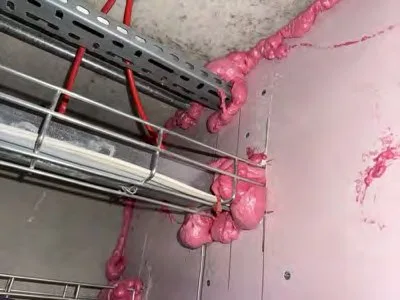
The photo on this page shows what is often found instead: pink foam blobbed over a wire tray at the head of a wall, the cables half buried and gaps still visible behind. It will not do. The foam is cut out and a batt goes in.
When new cables go in
Batt seals get damaged the moment someone adds a cable. The neat answer is to leave a sleeve or a spare cut in the batt that can be resealed. The practical answer is a label that tells the installer to reseal with mastic, and a check of the risers when the work is done.
Bigger openings
Openings above a certain size need the batt supported, or a different system such as fire-rated board with a smaller batt in it. The data sheet sets the maximum. Our BM TRADA / FIRAS-certificated contractors check the size before cutting anything.
Send the postcode, the type of building and a photo or two. We will tell you whether it needs a survey first and what the sealing is likely to cost.